SEO data is only as good as the proxy that pulled it. Datacenter IPs return CAPTCHAs, generic residential pools return rankings for the wrong city, and unrotated IPs get banned within the hour.
This guide ranks the best SEO proxies for rank tracking in 2026 - with honest notes on geo-targeting depth, residential pool quality, and the point where running your own proxy stack stops being worth the engineering time.
Key Takeaways
- Bright Data is the best SEO proxy for most teams in 2026, with 400M+ residential IPs, city-level geo-targeting, and the most reliable SERP data collection at enterprise scale.
- Residential proxies are the default choice for SEO tasks, Google actively detects and blocks datacenter IP ranges, making residential IPs far more likely to return clean search results.
- Geo-targeting depth determines rank tracking accuracy: if your SEO tool needs city-level or ISP-level location data, check that your provider supports it before committing.
- Managing proxy rotation, ban recovery, and CAPTCHA handling for SEO workflows is real engineering overhead, a scraping API handles all of that automatically if you would rather focus on the data.
Quick Overview: Best SEO Proxies in 2026
The best proxies for SEO tools in 2026 combine residential IP coverage, geo-targeting depth, and session control that matches your specific workflow, rank tracking, SERP scraping, or keyword research. The best SERP APIs sit at the managed end of this spectrum, handling proxy rotation and rendering for teams that do not want to configure proxies directly.
| Proxy Provider | Best For |
|---|---|
| Bright Data | SEO and SERP scraping at scale |
| Oxylabs | Enterprise rank tracking with SLA guarantees |
| Decodo (Smartproxy) | Mid-size SEO projects on a budget |
| IPRoyal | Small-scale rank checks, lowest entry cost |
| SOAX | Flexible geo-targeting by city or ISP |
| Infatica | Teams needing a built-in SERP scraper API |
The 6 Best SEO Proxies Compared
1. Bright Data - Best Overall for SEO at Scale
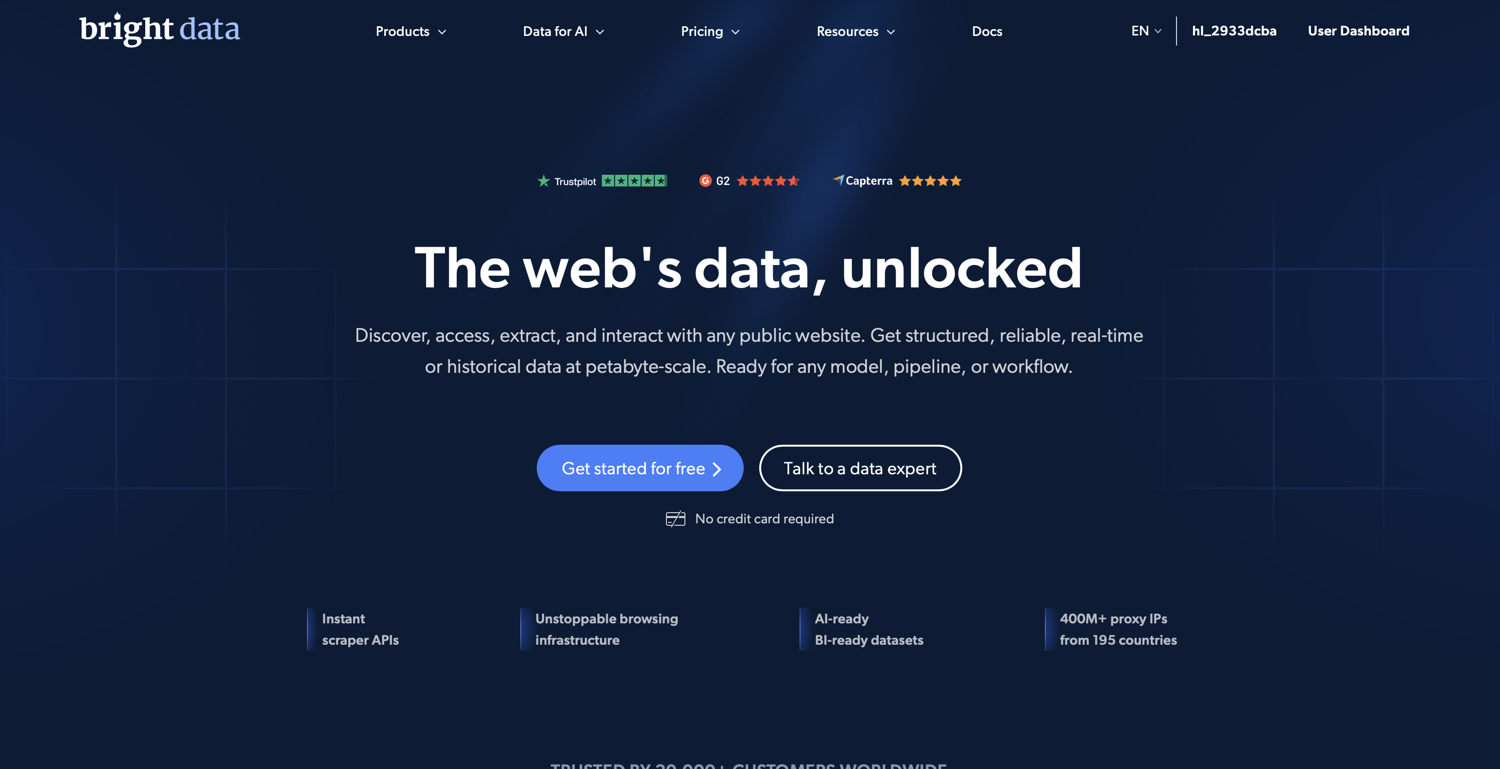
Bright Data's 400M+ proxy IPs span 195 countries with city-, ASN-, and ZIP-level geo-targeting, making it the most capable option for teams running rank checks across multiple locations simultaneously. It supports rotating and sticky sessions and works with all major SEO automation tools via standard HTTP and SOCKS5 endpoints. For rank tracking, backlink analysis, and large-scale SERP scraping, it is the strongest pool on this list.
- IP pool: 400M+ proxy IPs
- Proxy types: Residential, ISP, datacenter, mobile
- Geo-targeting: Country, city, ASN, ZIP, coordinates
- Session types: Rotating per request; sticky up to 30 minutes
- Pricing: Residential PAYG $4/GB, subscription from $2.50/GB (current 50% promotion; standard rates: $8/GB PAYG, $5/GB subscription)
Bright Data is the best overall SEO proxy for teams scraping Google and Bing at scale. The geo-targeting depth and pool quality justify the premium for high-volume rank tracking. Teams building on top of this infrastructure often pair it with rank tracking APIs to handle the data layer separately from the proxy layer.
2. Oxylabs - Best for Enterprise Rank Tracking
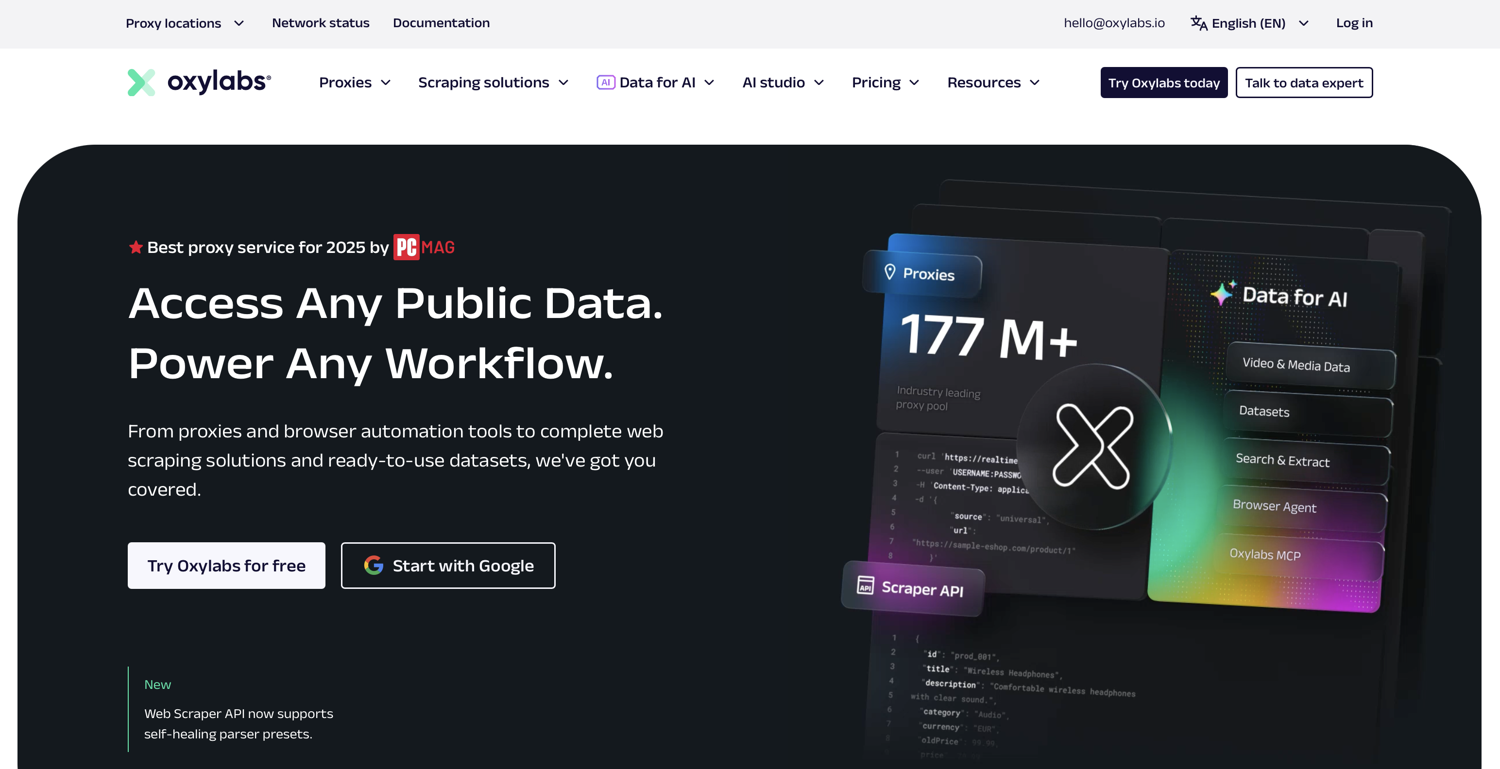
Oxylabs runs a 175M+ residential IP pool with 99.9% average uptime and city-level geo-targeting. It is purpose-built for high-volume data collection and offers dedicated account management and enterprise SLAs that Bright Data charges a premium for at smaller tiers. The platform's documentation is detailed, with code samples across Python, Node.js, and Go.
- IP pool: 175M+ residential IPs
- Proxy types: Residential, ISP, datacenter, mobile
- Geo-targeting: Country, city, state, ZIP, ASN
- Session types: Rotating per request; sticky sessions configurable
- Pricing: Residential proxies $6/GB for small teams, scaling to $2.50/GB at enterprise volume
Oxylabs is the strongest dedicated SEO proxies option for enterprise rank tracking where SLA guarantees and pool size are non-negotiable. Volume pricing scales well at enterprise tiers but requires contacting sales beyond standard plans, which makes upfront cost forecasting harder for smaller teams.
3. Decodo (Smartproxy) - Best Value for Mid-Size Teams
Decodo, formerly Smartproxy, covers 115M+ residential IPs with city-level targeting and a straightforward dashboard that SEO tools can integrate with in minutes. It is the most cost-efficient provider on this list for teams with predictable monthly request volumes and has won Proxyway's Best Value Provider award for three consecutive years.
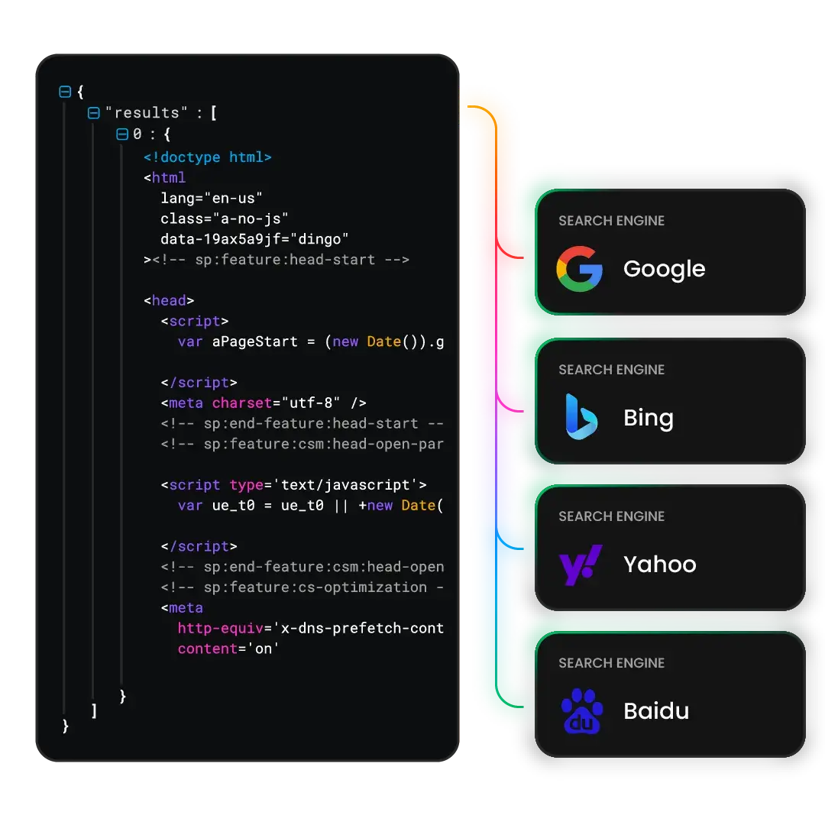
- IP pool: 115M+ residential IPs
- Proxy types: Residential, ISP, datacenter, mobile
- Geo-targeting: Country, city, state, ZIP
- Session types: Rotating per request; sticky up to 24 hours (1,440 minutes)
- Pricing: Residential proxies subscription starts from $2/GB.
Residential proxies support sticky sessions up to 24 hours (1,440 minutes), configurable via the sessionduration parameter. ISP proxies are needed only when static IPs are required beyond session persistence. Workflows requiring longer session persistence will need ISP proxies instead. The distinction between how forward and reverse proxies differ matters when deciding whether a backconnect residential layer or a reverse proxy sits closer to the SEO tool in the request chain.
4. IPRoyal - Best Budget Option for Small Projects
IPRoyal offers 32M+ residential IPs with PAYG pricing and no monthly minimum, traffic you purchase never expires. For teams running occasional rank checks or testing a new SEO automation script before scaling, the low barrier to entry and non-expiring traffic make it a practical starting point. IPRoyal is a legitimate, registered commercial proxy provider operating legally in most jurisdictions, which directly addresses the common question about whether it is legal to use.
- IP pool: 32M+ residential IPs
- Proxy types: Residential, ISP, datacenter, mobile
- Geo-targeting: Country, city, state
- Session types: Rotating; sticky up to 7 days
- Pricing: Residential proxies start from $1.75/GB.
The 32M pool is smaller than enterprise providers, and subnet diversity is narrower. This is unlikely to cause problems for standard SEO tasks but may surface availability gaps on niche regional targets. The PAYG rate is higher than subscription pricing at Decodo for comparable volumes.
5. SOAX - Best for Flexible Geo-Targeting
SOAX runs 155M+ residential IPs with city-, ISP-, and ASN-level geo-targeting in a single unified plan that covers residential, mobile, ISP, and datacenter proxies. For SEO teams that need to simulate local searches in specific cities or from specific ISPs, SOAX's targeting depth is the most granular of any provider on this list.
- IP pool: 155M+ residential IPs
- Proxy types: Residential, mobile, ISP, datacenter
- Geo-targeting: Country, region, city, ISP, ASN
- Session types: Rotating per request; sticky up to 1 hour (residential/mobile)
- Pricing: Residential proxies start from $3.60/GB (Starter plan, 25GB minimum)
The Starter plan's 25GB minimum may be more than small teams need. SOAX is better suited for teams with consistent monthly SEO data volume than for occasional or project-based use.
SOAX is the best SEO proxy provider 2026 for teams that need ISP- or city-level targeting precision. The dedicated SEO proxies use case fits particularly well for local SERP tracking across multiple cities.
6. Infatica - Best Built-In SERP Scraper API
Infatica offers 35M+ residential IPs alongside a built-in SERP scraper API that handles JavaScript rendering, CAPTCHA solving, and proxy rotation in a single call. For SEO teams that want to pull structured search result data without building a scraping layer on top of raw proxies, Infatica's combined offering reduces integration overhead significantly.
- IP pool: 35M+ residential IPs
- Proxy types: Residential, datacenter, ISP, mobile
- Geo-targeting: Country, region, city
- Session types: Rotating per request; sticky sessions available
- Pricing: Residential proxies start from $3.84/GB (25GB plan)
The residential pool at 35M IPs is smaller than Bright Data, Oxylabs, or SOAX, which can limit performance on heavily rotated targets. Teams running web unblocker tools alongside their proxy infrastructure are already covering the same JavaScript rendering and CAPTCHA bypass functionality that Infatica's SERP API bundles in.
What Makes a Proxy Good for SEO Tasks?
Residential vs. Datacenter Proxies for SEO
Residential proxies are the default for SEO workflows. Google actively detects and blocks datacenter IP ranges, returning CAPTCHAs or soft blocks instead of results. Datacenter subnets are among the first to trigger Google's automated query filters at scale.
Residential proxies for SEO and proxies for SERP scraping work on the same principle: residential IPs are assigned by ISPs to real devices, so queries routed through them are far less likely to be flagged. The tradeoff is cost (residential proxies are typically 5-15x more expensive per GB than datacenter alternatives) but for tasks where data quality depends on receiving an actual search result, that difference is justified.
Datacenter proxies work only for SEO tasks that do not touch Google or Bing directly. Free proxy scraping tools and free proxy lists for web scraping both perform poorly on Google compared to paid residential options.
Why Geo-Targeting Depth Matters for Rank Checks
Rank tracking accuracy depends on simulating a search from the right location. Google personalizes results at the country, city, and ISP level, a keyword ranking in London may show entirely different results from Manchester. Pulling SERP data without geo-targeting returns aggregated results, not the localized rankings your campaigns depend on. City-level targeting requires meaningful IP density in each target city; ASN-level targeting lets you simulate traffic from a specific ISP, which matters for local pack verification and ISP-dependent content.
Here's a comparison table for a better understanding.
| SEO task | Residential | ISP/Static | Datacenter | Mobile |
|---|---|---|---|---|
| SERP scraping (Google, Bing) | Best fit | Works | Often blocked | Works |
| Local rank tracking | Best fit | Works | Inaccurate geo | Best fit |
| Keyword research at scale | Best fit | Works | Works | Works |
| Backlink analysis | Works | Works | Best fit | Works |
| Technical site audit | Works | Works | Best fit | Unnecessary |
| Competitor content monitoring | Works | Best fit | Best fit | Unnecessary |
| Mobile SERP verification | Works | Inaccurate | Inaccurate | Best fit |
When to Use an SEO Proxy vs. a Scraping API
Raw residential proxies give you full control over how requests are routed. You choose the rotation frequency, session duration, geo-target, and authentication method. For SEO engineers who need to integrate with a specific tool that accepts proxy configuration directly, raw proxies are the right architectural choice.
The tradeoff is everything else, you handle ban recovery when Google starts returning CAPTCHAs, you manage rotation logic when IPs burn out, and you build or maintain JavaScript rendering if your target SERPs load dynamically. Per-GB billing compounds this: a failed request that returns a CAPTCHA still costs bandwidth.
A scraping API handles that infrastructure for you. It manages proxy rotation, renders JavaScript-heavy SERPs, solves CAPTCHAs, and retries failed requests automatically. The relevant question is whether your team's bottleneck is IP access or engineering overhead. Teams that need structured data from Google Trends scraping APIs or Bing search scraper tools often find a managed API removes more friction than a raw proxy layer adds.
Use a raw SEO proxy when you need direct integration with an existing SEO tool that requires manual proxy configuration, or when you need fine-grained control over rotation behavior that a managed API does not expose. Use a scraping API when your goal is clean SERP data and you do not want to manage the infrastructure that delivers it.
How to Choose the Right SEO Proxy for Your Workflow
- Start with your primary SEO task. Rank tracking at scale needs rotating residential proxies with city-level geo-targeting. Backlink analysis and site crawling can often run on ISP proxies or datacenter IPs. Mixing proxy types by task is a common cost optimization.
- Match billing model to request volume. PAYG pricing suits teams with low or unpredictable monthly volume. Subscription pricing is more cost-effective if you run thousands of SERP queries per day. When evaluating seo proxy providers 2026, run the math on your expected monthly GB before comparing headline plan prices.
- Check your SEO tool's proxy compatibility. Some tools like GSA SER, Scrapebox, or ScrapeOwl, accept direct proxy configuration. Others route through their own infrastructure and do not support external proxies. Verify before purchasing a plan.
- Test before committing. Most providers on this list offer a free trial or small starter option. Run your actual SEO queries (not synthetic tests) against the provider's pool before signing up for a larger plan.
"Is it legal to use proxies for SEO tasks?" is a common question, scraping publicly available search results is generally legal in most jurisdictions. For teams also running competitor price scraping tools alongside SEO data collection, the same residential proxy infrastructure typically covers both use cases without separate configuration.
Skip the Proxy Management Layer
Running rank checks and SERP scraping at scale means dealing with Google's anti-bot systems directly. Residential proxies get you past the IP detection layer, but ban recovery, CAPTCHA handling, and JavaScript rendering on dynamic SERPs are still your problem to solve.
ScrapingBee handles all of that in a single API call. You pass a URL and a geo-target, and it returns the rendered HTML. For SEO teams whose bottleneck is getting clean, consistent SERP data rather than managing the infrastructure that delivers it, AI web scraping tools like ScrapingBee and the broader category of web scraping services remove the proxy management layer from the equation entirely.
If you're interested, you can try ScrapingBee free today - get 1,000 free credits!
SEO Proxy FAQs
Is IPRoyal legal?
IPRoyal is a legitimate commercial proxy provider and legal to use in most jurisdictions. Using it for SEO tasks like rank tracking and SERP scraping is generally permitted. Legality depends on how you use the proxy, not the provider, scraping public search results is widely accepted, while violating a site's terms of service is a separate consideration.
What is the most popular proxy?
Bright Data is widely considered the most popular proxy service for business and developer use, with one of the largest residential IP pools available. For SEO-specific use cases, Bright Data and Oxylabs are the most commonly referenced providers in developer communities, based on community threads and proxy benchmark publications.
Are proxy sites illegal?
Using a proxy service is not illegal in most countries. Proxies are standard tools used by businesses, developers, and researchers worldwide for legitimate data collection. The legal question applies to how you use the proxy, accessing systems without authorization or scraping private data may violate laws like the CFAA in the US, but collecting public search data through a proxy is generally fine.
What's the best platform for SEO?
The best SEO platform depends on your use case. Ahrefs, Semrush, and Moz are the most widely used tools for keyword research, backlink analysis, and rank tracking. For teams building custom SEO data pipelines that require fresher or more granular data than off-the-shelf tools provide, combining a residential proxy provider with a scraping API gives more flexibility and control over what data you collect and how often.
Can I use free proxies for SEO tasks?
Free proxies are unreliable for SEO. They are frequently blocked by Google and Bing, have high failure rates on SERP queries, and may log or inject traffic. For any production SEO workflow, a paid residential proxy provider is strongly recommended. Free proxies are acceptable only for basic, non-critical tests before committing to a paid plan.

Jakub is a Senior Content Manager at ScrapingBee, a T-shaped content marketer deeply rooted in the IT and SaaS industry.