The best Patreon scraper in 2026 depends heavily on what you're trying to do with the data. A Patreon scraper collects publicly available creator data such as membership tiers, patron counts, pricing, post activity, and creator profiles, at a scale and speed that manual research can't match.
The Patreon scraping is harder than it used to be: Patreon loads most of its content dynamically via JavaScript, uses anti-bot systems that block basic HTTP requests, and rate-limits aggressive crawlers. Whether you need a scraper for Patreon analytics pipelines or a no-code tool for creator research, the right solution depends on your scale, technical setup, and compliance requirements.

Quick Answer: What's the Best Patreon Scraper?
The best Patreon scraper website for non-technical users is Thunderbit or Axiom.ai, both require no code and work directly in the browser. For developers building custom workflows, a dedicated web scraping API is a more scalable and reliable foundation. ScrapingBee is the best Patreon scraper for teams that need JavaScript rendering, rotating proxies, and structured JSON output without managing infrastructure.
Shortlist - Comparison Table
Here is a comparison of the best Patreon scraper sites in 2026. Use it to match each tool to your workflow. For a scraper for Patreon that handles JavaScript and proxies at scale, focus on the API-based options.
| Tool | Type | Handles JS | Proxy Rotation | Anti-bot Bypass | Ideal For | Scale |
|---|---|---|---|---|---|---|
| ScrapingBee | API | Yes | Yes | Yes | Developers, analytics pipelines | High |
| Apify | Actor Platform | Yes | Yes | Partial | Custom automation workflows | High |
| Automatio | No-code/AI | Yes | Yes | Yes | Non-technical users, AI scraping | Medium |
| Axiom.ai | No-code | Yes | Conditional / Cloud Only | Partial | Browser task automation | Low-Medium |
| Thunderbit | No-code/AI | Yes | No | Partial | Simple research, non-technical | Low |
Best Patreon Scraper Tools
Reliable Patreon scraping requires tools capable of real browser rendering, as Patreon's dynamic content loads after JavaScript executes. Tools without this capability typically return incomplete datasets.
1. ScrapingBee
ScrapingBee is a backend scraping API, not a plug-and-play UI tool. It manages headless Chrome instances, rotates proxies automatically, and handles Patreon's anti-bot systems without any configuration on your end. Using the Patreon web scraper API, you send a parameterized request and get back structured JSON (creator profiles, tier pricing, patron counts, and post data) ready to feed into your pipeline.
As a scraper for Patreon that needs to hold up in production, ScrapingBee charges per successful request, which keeps costs predictable at scale. Rated 4.8 out of 5 on G2, it's the best Patreon scraper for developers who want reliability without infrastructure overhead.
Pricing overview
Plans start at: Hobby ($19/month), Freelance ($49), Startup ($99), Business ($249), Business+ ($599+). 1,000-credit free trial.
2. Apify Patreon Scraper

Apify is a cloud automation platform built around Actors. There are multiple pre-built Patreon Actors that extract creator profiles, membership tiers, patron counts, earnings estimates, and post statistics, with results exported as JSON, CSV, or Excel. Developers can also build custom Actors using Playwright or Puppeteer for more complex workflows. Apify is a strong fit when Patreon scraping is part of a broader automation workflow rather than a standalone task.
Pricing overview
Tiers: Free ($5 credits), Starter ($29/mo), Scale ($199/mo), Business ($999/mo). Enterprise pricing is custom.
The Catch: Your subscription covers raw server power, but ready-made tools in the Apify Store usually add a Pay-per-Result premium (typically $1 to $5 per 1,000 records). This extra cost is automatically deducted right from your monthly Apify credit balance.
3. Automatio Patreon Web Scraper
Automatio is an AI-powered web automation platform with a dedicated Patreon scraper template. It handles dynamic content loading, automated pagination and scrolling, and can bypass Cloudflare and DataDome protections.
You describe the data you want in plain language, and the AI extracts it, no CSS selectors or coding required. Scheduled data refreshing lets you track patron counts and tier changes automatically over time. For non-technical users who need recurring Patreon data on a schedule without writing code, it's one of the more capable options on this list.
Pricing overview:
The Shift: Automatio no longer offers low-cost, self-serve plans. They now operate entirely as a premium, fully-managed automation service.
The Cost: Flat-rate ad-hoc packages start at $850 (for 10 hours of development time), while their fully managed ongoing subscriptions sit at $3,900/month.
The Takeaway: It is strictly an enterprise tool for teams with a serious budget who want their scraping pipelines completely built and maintained for them.
4. Axiom.ai Patreon Scraper
Axiom.ai is a no-code browser automation tool that works as a Chrome extension. You build scraping workflows visually. Point and click to select the elements you want, configure pagination, and output to Google Sheets, CSV, or JSON. Because it controls a real Chrome instance, it handles JavaScript-rendered content and passes basic bot detection checks that trip up headless browsers.
For small to medium automation tasks such as monitoring a set of creator pages or extracting tier data for a shortlist of creators, it works well.
For production-scale Patreon scraping, the scaling and anti-bot limitations make it a poor fit.
Pricing overview
Starter $15/month, Pro $50/month, Pro Max $150/month, Ultimate $250/month.
5. Thunderbit Patreon Scraper
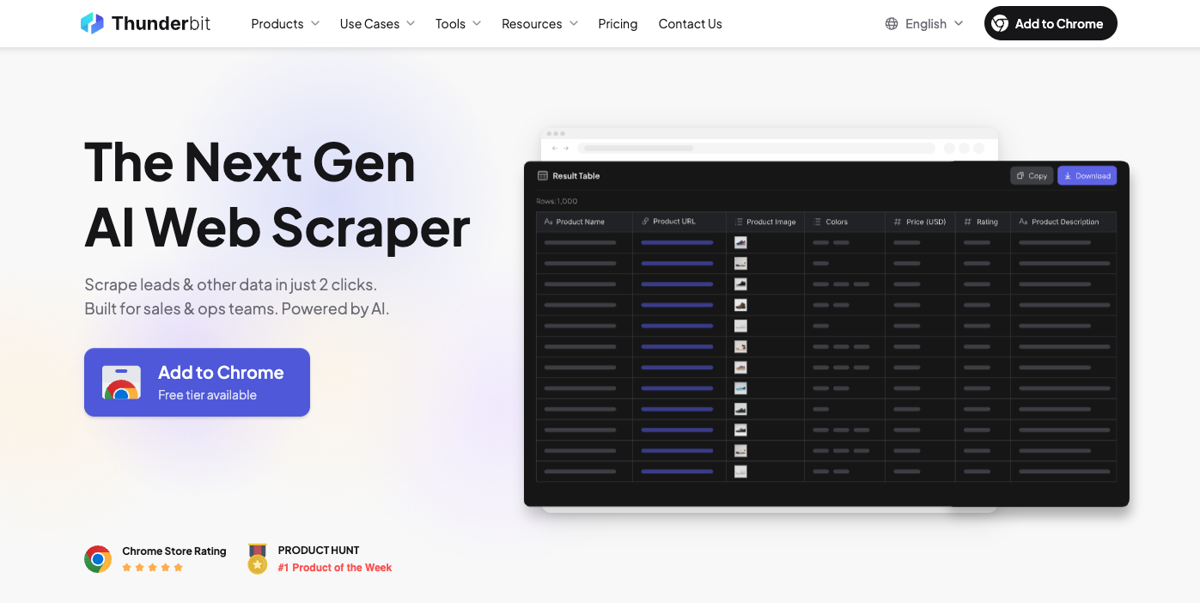
Thunderbit is an AI-powered Chrome extension designed for non-technical users. It uses an "AI Suggest Fields" feature that automatically identifies the data fields available on a Patreon page (creator names, membership tiers, post counts, and more) and structures the output without any manual configuration.
The free trial allows up to 6 pages per month, and paid plans extend that capacity. For one-off research and non-technical users who need structured Patreon data fast, it's a practical starting point.
Pricing overview
Free tier is available. Starter $9/month, Pro $16.50/month.
What Matters When Choosing the Right Tool
Choosing the best Patreon scraper comes down to six factors. You can work through these before committing to any tool.
JavaScript rendering: Patreon loads creator profiles, tier details, and post feeds dynamically. Any tool that fetches raw HTML will return incomplete data.
Proxy rotation: Patreon rate-limits repeated requests from the same IP. A scraper for Patreon that runs without rotating proxies will hit blocks quickly at any meaningful volume.
Anti-bot handling: Patreon uses anti-bot detection that checks browser fingerprints and request patterns. Tools that control a real browser instance handle this better than raw HTTP scrapers.
Scalability: No-code browser tools work for small research tasks. Production pipelines need a backend API with high concurrency.
Structured output: If the data is going into a pipeline or database, you need clean JSON or CSV. Not every tool structures output consistently across different page types.
Compliance: Patreon's terms of service restrict automated access. Scraping publicly available data is generally defensible, but storing EU user data triggers GDPR obligations. Enterprise tools like ScrapingBee publish formal compliance documentation; verify this before choosing a tool for sensitive workflows.
From a legal standpoint, courts in multiple jurisdictions have upheld the right to scrape publicly available data, but Patreon's terms of service create contractual restrictions regardless. Implement responsible rate limiting, avoid scraping private or paywalled content, and consult legal counsel if your use case involves storing or redistributing data at scale.
Something to Chew On
The best Patreon scraper website in two years probably looks different from what's on this list today. Anti-bot systems are getting smarter, Patreon and similar platforms are adopting behavioral analysis that goes beyond IP reputation and header inspection, looking at scroll patterns, click timing, and session continuity. Basic browser automation tools that currently pass detection by running a real Chrome instance will face harder challenges as these systems mature.
The counter-trend is that AI-assisted scraping is making it easier to build robust extraction workflows without writing complex selectors or handling edge cases manually. Tools like Automatio and Thunderbit point toward a future where you describe the data you want and the AI figures out the extraction logic. For most use cases, this will continue to lower the floor on scraping complexity. The ceiling (large-scale, reliable, production-grade extraction) will remain the domain of API-based infrastructure for the foreseeable future. The gap between the two is where most teams will make their tooling decisions.
Ready to Scrape Patreon with ScrapingBee?
ScrapingBee is the backend infrastructure behind scalable Patreon scraping workflows. It handles JavaScript rendering, proxy rotation, and anti-bot bypass through a single REST API, giving developers full control over extraction logic without managing browsers or proxy pools. It's reliable across creator profiles, tier pages, and paginated post feeds, and it scales without requiring changes to your pipeline. If you're building a best Patreon scraper for analytics or monitoring, or need a dependable scraper for Patreon at production scale, sign up today and get free credits to test it against your target pages first.
Patreon Scraping FAQs
Is it legal to scrape Patreon data?
Scraping publicly available Patreon data is generally defensible in many jurisdictions, courts, including the Ninth Circuit have upheld the legality of scraping public web data. Patreon's terms of service restrict automated access, which creates contractual risk separate from legal permissibility. Storing or processing EU user data also triggers GDPR obligations. Consult legal counsel for your specific use case and avoid scraping paywalled or private content.
What is the best Patreon scraper website for non-developers?
Thunderbit and Axiom.ai are the most accessible options for non-technical users. Both work as Chrome extensions with visual interfaces that require no coding. Thunderbit's AI field detection makes initial setup faster. Automatio is also worth considering if you need scheduled data refreshing and AI-assisted extraction without code.
Can I scrape Patreon without getting blocked?
Yes, with the right setup. Patreon detects automated traffic through IP reputation, request patterns, and browser fingerprinting. Using rotating residential proxies, realistic browser fingerprints, and paced request timing significantly reduces block rates. Backend APIs like ScrapingBee handle all of this automatically. DIY scrapers need to implement it manually.
Does Patreon have an official API for public data?
Patreon has an OAuth-based API, but it's designed for creators managing their own accounts, not for third-party data extraction. It does not provide public access to creator profiles, tier data, or patron counts at scale. For research and analytics use cases, scraping remains the primary method for accessing publicly visible Patreon data.
What's the difference between a Patreon scraper app and an API?
A scraper app is a point-and-click tool you operate manually or on a basic schedule. A scraping API is infrastructure you call programmatically from your own code or pipeline. APIs offer more control, higher concurrency, and better reliability at scale. Scraper apps are faster to set up for simple, low-volume tasks.
How do proxies help when scraping Patreon?
Patreon rate-limits and blocks IP addresses that send too many requests in a short period. Proxies route your requests through different IP addresses, distributing the request load and making traffic look like it's coming from multiple users. Residential proxies (IPs assigned to real devices) are harder for Patreon to flag than datacenter IPs. Most production scraping pipelines use automatic residential proxy rotation to avoid bans.

Jakub is a Senior Content Manager at ScrapingBee, a T-shaped content marketer deeply rooted in the IT and SaaS industry.