The rapid growth of ecommerce data extraction has transformed how businesses approach price tracking, inventory monitoring, competitor research, and analytics. This guide compares the top ecommerce scraper solutions across APIs, proxy platforms, and automation tools. Discover which scraping tool fits your technical needs, scale requirements, and data goals.
When building these data pipelines, many developers opt for a web scraping API to handle the complexities of header rotation and proxy management. Choosing the right ecommerce data scraping tools depends on your specific technical stack and the anti-bot measures of your target sites.
Quick Answer: What is the Best eCommerce Scraper?
The best ecommerce api depends entirely on your specific use case. Developer-focused APIs are ideal for scalable scraping, proxy networks suit enterprise needs, and automation tools are best for non-technical users.
We position ScrapingBee as the best ecommerce web scraper for developers needing reliable JavaScript rendering and anti-bot handling. Meanwhile, for those requiring massive IP diversity, various scraping tools for ecommerce provide the necessary global coverage for competitive intelligence.
Shortlist: Top eCommerce Scraping Tools
The following table summarizes the top ecommerce scraping tool options for various technical requirements.
| Tool | Best For | JavaScript Support | Proxy Handling | Pricing (Starts at) |
|---|---|---|---|---|
| ScrapingBee | Developers & Scalable APIs | Excellent (Headless) | Automatic Rotation | $19/mo |
| Oxylabs | Enterprise Scale | High | Residential & Mobile | $99/mo |
| Bright Data | Large-scale Data Sets | High | Largest Global Pool | $500/mo |
| Zyte | AI-Assisted Extraction | Medium | Smart Proxy Manager | $25/mo |
| Axiom.ai | No-code Automation | Native (Browser) | Custom / Built-in | $15/mo |
The Best Web Scraper for E-Commerce Stores
Selecting the best ecommerce product scraper requires evaluating performance, scalability, ease of integration, and anti-bot reliability. This detailed review of the top ecommerce data scraping tool options is based on technical capability and market positioning.
1. ScrapingBee
I tested our solution for 14 days and found it to be the best ecommerce api for developers building product intelligence systems. It acts as a powerful backend engine that manages headless browsers, rotating proxies, and AI web scraping to deliver structured JSON output.
- Best For: Scalable backend scraping for product pages, dynamic pricing, and reviews.
- Pros: Handles JavaScript rendering, automatic proxy rotation, and anti-bot bypass out of the box.
- Cons: Consumes more credits for heavy JavaScript-rendered pages compared to simple GET requests.
- Pricing: Starts at $19/month.
2. Oxylabs
Oxylabs provides enterprise-grade infrastructure designed for massive scale. Unlike developer-focused APIs, it offers vast residential and mobile proxy pools that allow teams to bypass regional restrictions and localized price tracking.
- Best For: Enterprise teams needing high-volume proxy networks and global IP diversity.
- Pros: Massive proxy pools and highly reliable infrastructure for ecommerce data scraping tools.
- Cons: Complex setup and pricing that may be prohibitive for smaller teams.
- Pricing: Starts at $99/month.
3. Bright Data
Bright Data is a leading web scraping tool for ecommerce providers known for its ethical proxy sourcing and robust scraping APIs. They focus heavily on compliance and provide specialized browsers for data extraction.
- Best For: Large organizations requiring deep compliance standards and global scraping strength.
- Pros: Largest residential proxy network and advanced session management.
- Cons: The interface and management tools have a steep learning curve.
- Pricing: Starts at $500/month.
4. Decodo
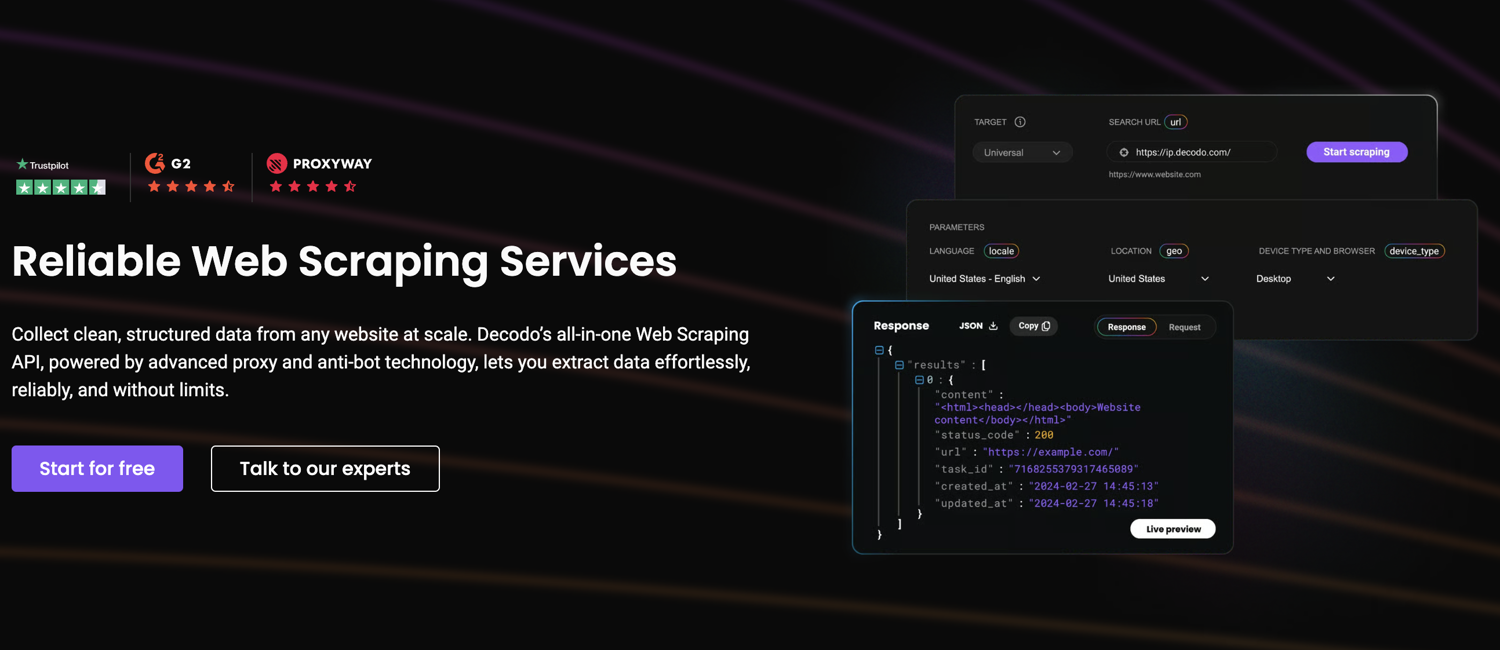
Decodo serves as a budget-friendly ecommerce scraping tool with a focus on residential proxy availability. It is a solid choice for teams that have built their own scraping logic but lack a reliable residential IP network.
- Best For: High-quality residential proxy access at an affordable price point.
- Pros: Competitive pricing for residential IP pools.
- Cons: Lacks the specialized high-level features found in dedicated scraping APIs.
- Pricing: Starts at $30/month.
5. Zyte
Zyte is a specialized ecommerce data scraping tool that leverages AI-assisted extraction to map product data automatically. This reduces the need to constantly update CSS selectors as websites change their layouts.
- Best For: Automated structured data extraction and AI-assisted web scraping.
- Pros: Smart proxy management and reduced maintenance via AI mapping.
- Cons: AI extraction accuracy can vary depending on the complexity of the target site.
- Pricing: Starts at $25/month.
6. ScraperAPI
As one of the top ecommerce web scrapers, ScraperAPI simplifies the process of rotating proxies and solving CAPTCHA via a single endpoint. It is built for developers who want a "hands-off" approach to proxy management.
- Best For: Simple API-based scraping, anti-bot handling, and proxy rotation.
- Pros: Easy to integrate with just a few lines of code; high success rates.
- Cons: Limited options for highly interactive, multi-step browser flows.
- Pricing: Starts at $49/month.
7. NetNut
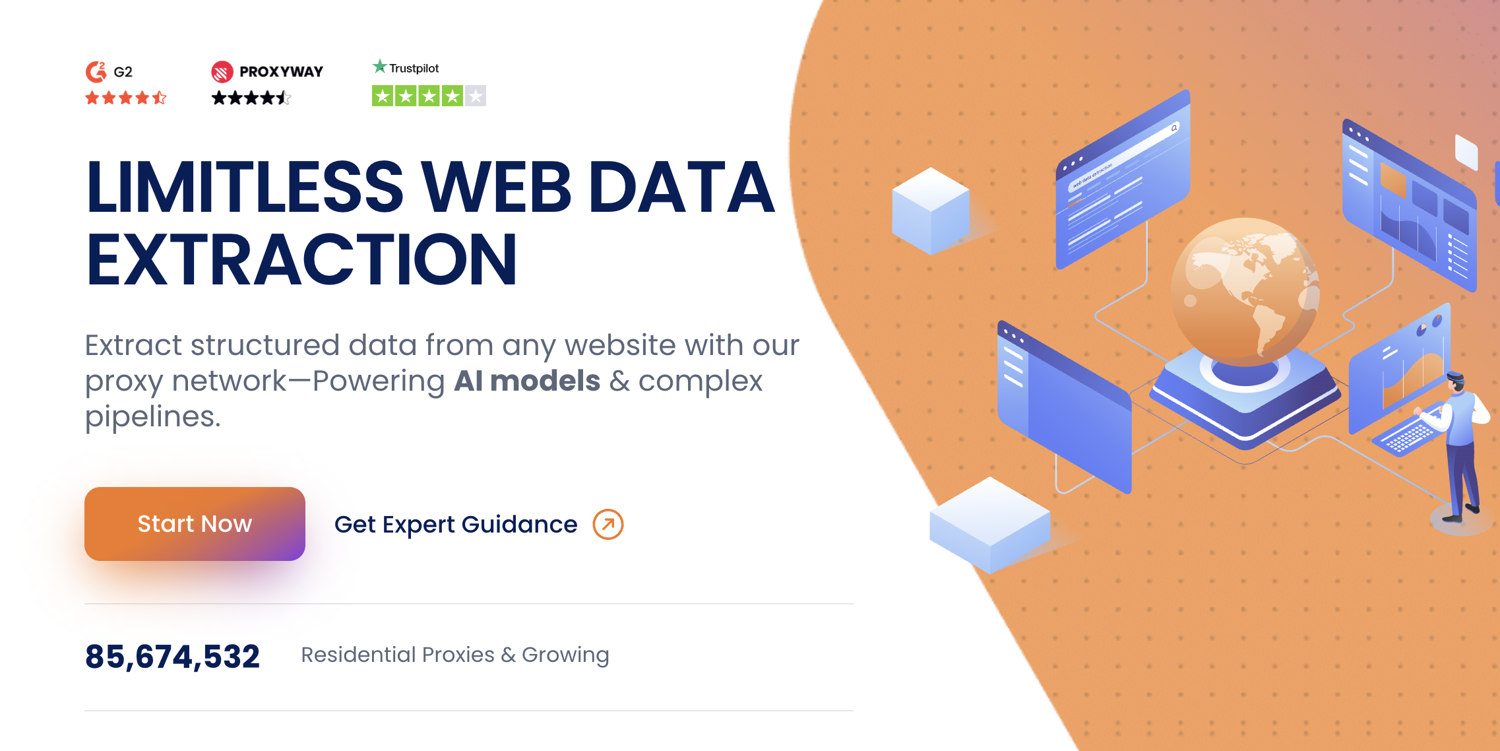
NetNut stands out among scraping tools for ecommerce because it leverages ISP proxy infrastructure. This provides superior stability and speed for maintaining long-lived sessions on retail platforms.
- Best For: High-speed scraping tasks where session consistency is critical.
- Pros: Direct ISP connectivity provides lower latency and higher trust scores.
- Cons: More expensive than standard residential proxy services.
- Pricing: Starts at $300/month.
8. Nimbleway
Nimbleway is positioned as an enterprise-grade data platform that integrates with cloud storage and analytics environments. It is one of the more advanced ecommerce scraping tools for managing end-to-end data pipelines.
- Best For: Data engineers building enterprise-level competitive intelligence platforms.
- Pros: Seamless integrations and high-performance infrastructure.
- Cons: Higher entry price and complex features for simple needs.
- Pricing: Starts at $300/month.
9. Axiom.ai
Axiom.ai is a browser-based scraping solution for ecommerce designed specifically for non-developers. It uses a visual interface to automate tasks like logging in and extracting data directly from your browser.
- Best For: Marketers and non-technical teams who need to automate browser tasks.
- Pros: No-code interface; handles complex interactions behind logins.
- Cons: Slower and harder to scale than server-side backend APIs.
- Pricing: Starts at $15/month.
10. ScrapingBot
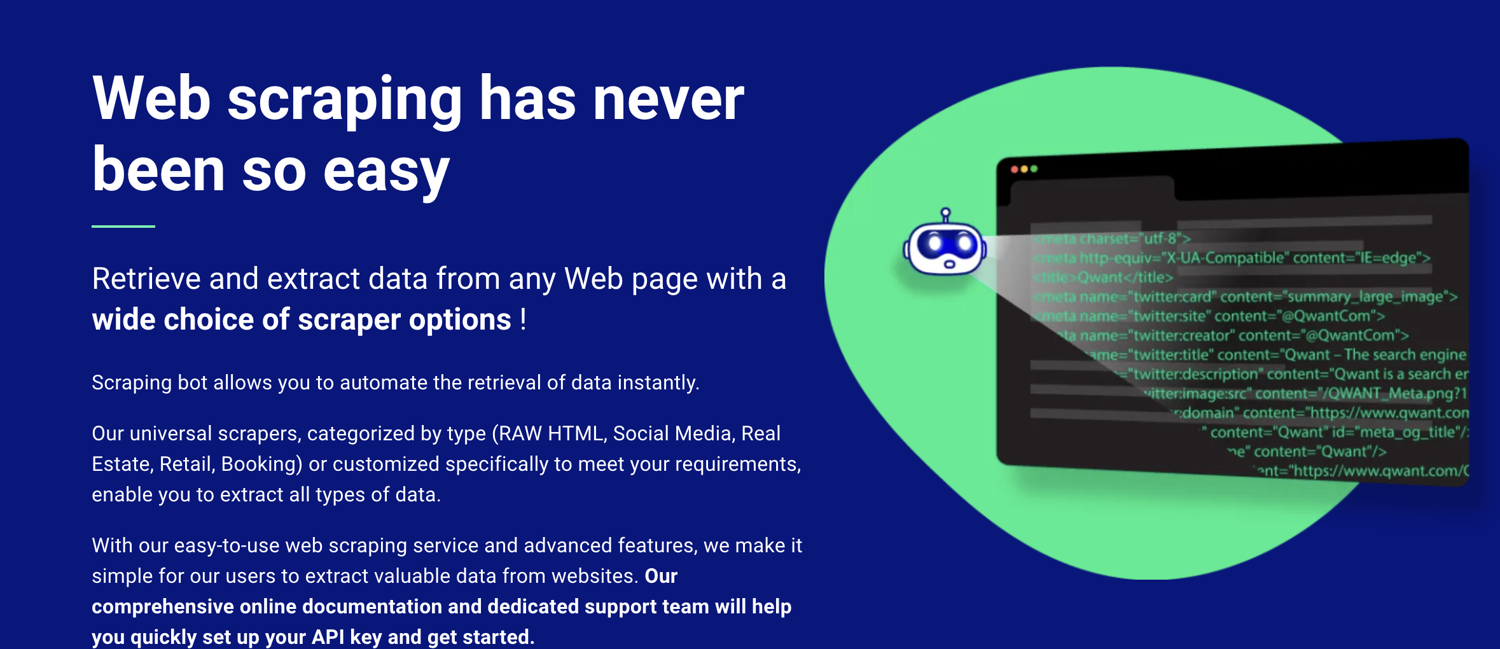
ScrapingBot is a specialized ecommerce product scraper that provides pre-built endpoints for specific marketplaces. This is ideal for those who only need data from a few major retailers.
- Best For: Quick, pre-built scraping endpoints for major marketplaces.
- Pros: Very easy setup for sites like Amazon or eBay; affordable pricing.
- Cons: Less flexibility if your target site is not on their supported list.
- Pricing: Starts at $19/month.
Our Ranking Criteria
To identify the top ecommerce scraper, we evaluated tools based on technical success rates, JavaScript rendering reliability, and CAPTCHA bypass capabilities. We also assessed proxy quality, documentation clarity, and pricing transparency to ensure high standards of trust.
How We Tested the eCommerce Scrapers
Our testing methodology involved scraping product pages, testing pagination depth, and monitoring rate limits to find the best ecommerce data scraping tools. We specifically looked for tools that could handle aggressive anti-bot triggers while maintaining performance.
Types of eCommerce Scraping APIs
There are three main categories of tools to consider when choosing the top ecommerce api for your team:
- Backend APIs: Managed services that handle browsers and proxies automatically.
- Proxy-based APIs: Infrastructure focused on vast IP diversity.
- No-code Automation: Visual tools for non-technical users to automate browser actions.
Why Pay for an eCommerce Website Scraper?
Investing in the best price scraping tool for e-commerce provides stability, anti-bot bypass, and significant time savings. While DIY scraping exists, the risks of being blocked and the high cost of maintenance often outweigh the price of a professional tool.
What eCommerce Targets Can You Scrape?
An ecommerce product scraper can target marketplaces, individual stores, and review platforms. You can extract data from:
- Amazon Scraper for product listings and prices.
- eBay Scraper for seller data.
- Shopify Scraper for store inventory.
- Etsy Scraper for unique product data.
- Alibaba Scraper or Costco Scraping API for wholesale insights.
Ready to Scrape eCommerce Sites with ScrapingBee?
ScrapingBee is the natural next step for developers who need scalable, JS-rendered scraping with built-in proxies. Our solution ensures reliability and fast integration for any ecommerce api project. Sign up today and get free credits to start your ecommerce scraping tools journey.
FAQs
What is eCommerce scraping?
It is the process of using an ecommerce scraping tool to automatically collect data from online retailers.
Is eCommerce scraping legal?
Scraping public data is generally legal, but you should always refer to reputable compliance sources like G2, GDPR, and CAN-SPAM.
What eCommerce data can be scraped?
Commonly scraped data includes product pricing, inventory levels, reviews, and seller information.
What is the best eCommerce API for price monitoring?
The best ecommerce scraper for price monitoring is one that can handle dynamic JavaScript content to ensure the most accurate data.
How do eCommerce scrapers bypass anti-bot protection?
They use rotating proxies, headless browser management, and CAPTCHA solving to mimic real human behavior.
Can I scrape Amazon, eBay, and Shopify stores at scale?
Yes, using professional APIs and ecommerce scraping tools, you can extract data from these platforms at high volumes.

Jakub is a Senior Content Manager at ScrapingBee, a T-shaped content marketer deeply rooted in the IT and SaaS industry.